

NSW Building Bill Targets Prefab Homes, Approvals and Certifiers

NSW has introduced building legislation that would make the state the first Australian jurisdiction to formally recognise modern methods of construction (MMC) in law.
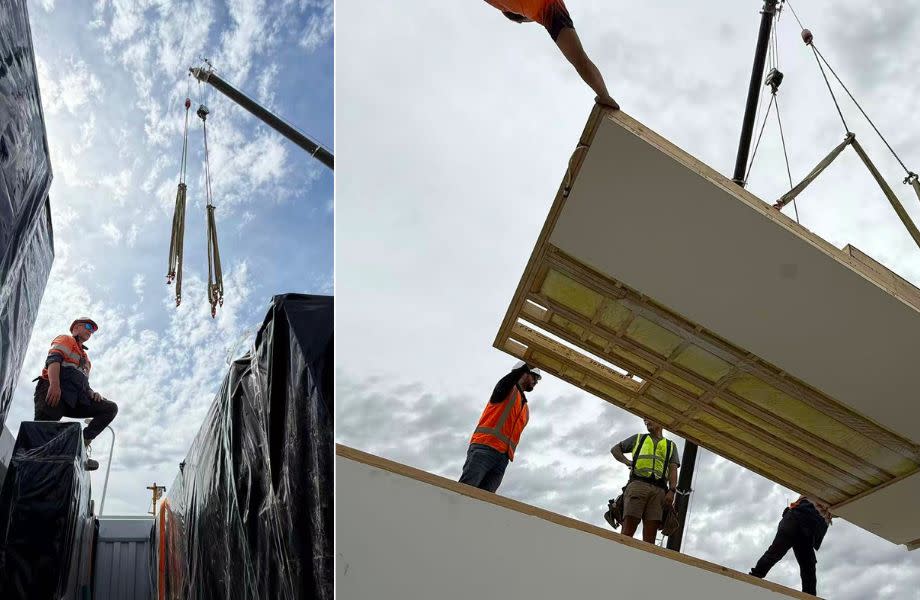
The Building (Approvals and Practitioners) Bill 2026, tabled in parliament this week would define prefabricated buildings, integrate MMC into the approvals system and introduce consumer protections for prefabricated home buyers.
The Commonwealth Productivity Commission estimates MMC, including modular and prefabricated construction, could reduce overall costs by up to 20 per cent and cut build times by 50 per cent compared to traditional methods.
Cutting through red tape
Streamlining a fragmented approvals process is another aim of the Bill.
Duplicative design requirements for identical building elements would be removed, with the government estimating savings of around $330,000 per apartment block.
Staged approvals would allow construction to begin and occupants to move in earlier. Minor variations to development consent within defined parameters would be permitted without full reassessment. Industry professionals would access the new framework through a single digital platform.
NSW building minister Anoulack Chanthivong said the reforms targeted unnecessary red tape around MMC and prefab housing construction.
“As we confront this once-in-a-generation housing supply challenge, prefabricated homes are becoming an increasingly popular time and cost-effective alternative to traditional housing,” Chanthivong said.
“This Bill, if passed, will see NSW become the leading jurisdiction in Australia when it comes to modern methods of construction.”
Certifiers face stiffer penalties
Conflict-of-interest rules for certifiers would also be tightened under the Bill. Maximum court-imposed penalties for breaching such rules would rise from $33,000 to $1.1 million, with automatic suspension applying upon conviction.
NSW building commissioner James Sherrard said the reforms would give his agency the tools needed to oversee certifiers and prefabricated construction types.
Master Builders NSW executive director Matt Pollock welcomed the legislation.
“This Bill is about getting the balance right between reforms which help to improve consumer protections and lift quality in the building industry, while also speeding up and streamlining approvals processes so we can get on with the job of building more homes,” Pollock said.
Planning and public spaces minister Paul Scully said the Bill built on planning reforms passed last year.
“With this Bill we’re taking another fragmented, inconsistent and often repetitive system and replacing it with a clear and consistent approach that will enable better outcomes for NSW,” Scully said.
Prioritising renewable projects
Introduced the same day, the Energy Legislation Amendment (Prioritising Renewable Energy) Bill 2026 would allow the NSW energy minister to identify and fast-track priority renewable energy projects.
Environmental and community assessment requirements would remain unchanged.
Renewable energy currently accounts for approximately 36 per cent of NSW’s annual electricity supply.
Councils and communities hosting energy projects would benefit under the NSW Benefit-Sharing Guideline, which the Bill would enshrine in law, according to the state.
More than $180 million in benefits have been committed to communities since the guideline’s introduction in November 2024.
Energy minister Penny Sharpe said the “new legislation will mean infrastructure projects that are critical for manufacturing jobs, economic growth and energy affordability don’t get stuck in the queue”.
Industry awaiting regulatory clarity
According to industry sources, regulatory clarity has been the missing ingredient for MMC adoption at scale.
Building 4.0 CRC director Mathew Aitchison said the urgency behind current MMC reform differs from previous construction downturns.
“Waiting is simply not going to make it better. No one thinks that the cost of materials or labour is coming down, so why would we expect the cost of construction to come down?” Aitchison told The Urban Developer.

Aggregated demand from development corporations, build-to-rent funds or industry-led consortia is widely seen as the key to making factory production viable at scale.
Last month, Federal housing minister Clare O’Neil released an interim report on National Construction Code reform, outlining five priorities including simplifying code access and reducing compliance burdens.
O’Neil told the Property Council of Australia’s National Housing Solution Summit that each project carried tens of thousands of dollars in compliance costs, compounded by around 600 pages of state and territory variations.
Prefab and modular manufacturers, she said, had in some cases waited up to 10 years to have new products and construction methods recognised in the code.
The Federal reform proposals are due to go to state and territory building ministers in the second half of this year.


It’ll Take Gymnastics to Deliver in this Market, Sydney Warned

From Ocean Waste to Housing Fix: Hyperion’s 3D Printing Pivot

Contractor Payment Changes Have Victorian Developers on Back Foot

Glenn Piper’s $60m Hook Island Reboot Leads Whitsunday Awakening


