

Brisbane Apartment Boom Enters Unchartered Territory

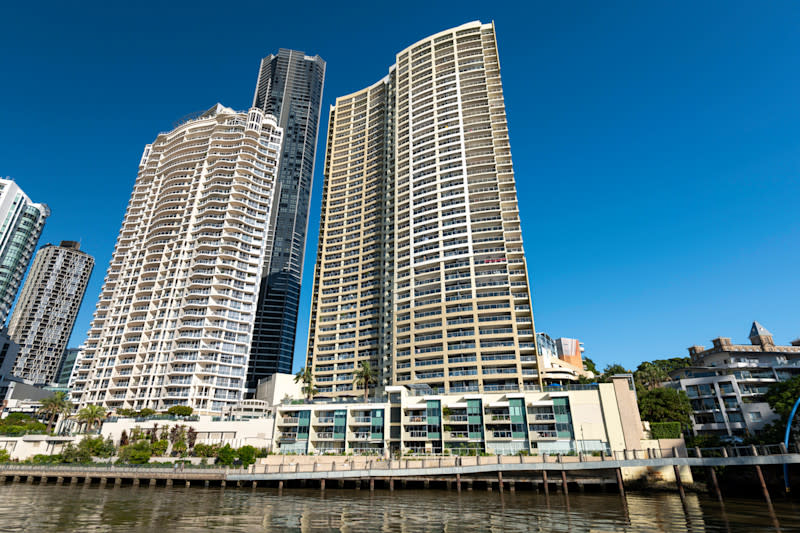
Brisbane’s apartment boom has pushed the city into uncharted affordability territory, with median unit prices exceeding five times average household income, overtaking Sydney on a price-to-income basis for the first time.
New research from JLL found Brisbane’s median apartment price climbed 6.4 per cent in the year to April 2026 to reach $750,000, continuing a sharp escalation that has reshaped the eastern seaboard’s residential hierarchy.
The findings, released in JLL’s H1 2026 Australian Apartment Market Outlook, show Brisbane’s annual apartment price growth hit 16.5 per cent to December 2025, fuelled by interstate migration, severe housing undersupply and vacancy rates compressed to just 0.8 per cent.
By comparison, Sydney apartment prices rose 1.2 per cent year-to-date to $825,000, while Melbourne increased 1.3 per cent to $625,000.
The report said the rapid escalation in Brisbane values had pushed the city’s apartment price-to-income ratio to five times mean household income, overtaking Sydney’s 4.5 multiplier and underscoring mounting affordability pressures.
JLL residential research manager Will Silk said the River City’s affordability had deteriorated faster than any other capital city.
“Brisbane's overall affordability has deteriorated faster than any Australian capital, with median apartment rent as a proportion of household income reaching nearly 21 per cent—matching Sydney for the first time and highlighting the structural supply-demand imbalance challenging the market,” Silk said.
The report comes as the Reserve Bank’s three consecutive rate hikes lifted the cash rate to 4.35 per cent, while Federal Budget changes to negative gearing provisions created additional uncertainty for investors and developers.
Despite a lift in apartment approvals nationally—including a 45.9 per cent surge in Queensland approvals in the year to March 2026—JLL said the gap between projects approved and projects delivered remained acute.
Construction cost inflation and labour shortages, particularly in Queensland ahead of the 2032 Olympic and Paralympic Games, were continuing to constrain new supply.
JLL forecasts Brisbane apartment prices will rise a further 11 per cent through 2026 before moderating to 3 per cent growth in 2027 as affordability constraints intensify.
Sydney and Melbourne are forecast to record 4 per cent and 3 per cent growth respectively this year.
The rental market is also expected to remain under pressure, with Brisbane rents forecast to increase 6.5 per cent through 2026, ahead of Sydney at 4.5 per cent and Melbourne at 4 per cent.
Silk said higher interest rates were weighing on purchasing power but simultaneously increasing rental demand as more prospective buyers delayed entering the market.
“Despite near-term challenges, chronic housing undersupply and robust population growth support medium-term fundamentals across all three capitals,” he said.
Over the five years to 2030, JLL forecasts Brisbane will post average annual apartment price growth of 5.6 per cent, marginally ahead of Melbourne at 5 per cent and Sydney at 4.9 per cent.
The report also identified Melbourne as emerging as a relative value play for investors, citing its lower median apartment price point, tight vacancy rates and stronger affordability profile.
JLL head of residential project sales Australia Freya Watson said developers would need to be increasingly selective in the current environment.
“While approvals are increasing, feasibility remains the critical constraint—construction cost inflation is outpacing sales realisations in some sub-markets, and finance costs continue to fluctuate,” Watson said.
She said supply-constrained locations with strong employment and transport fundamentals would continue to attract buyer demand, particularly in Brisbane and Sydney’s inner-city precincts.
“For apartment buyers, the current rate environment creates both challenges and opportunities,” Watson said.
“Buyers who can weather the near-term headwinds and focus on quality apartments in areas with strong employment and transport links are likely to benefit as the market accelerates again in 2028-2029 when rates soften.”


Urban Repair: Indi Footscray Makes Case for What BtR Owes the City

Kurraba’s $490m Push To Keep Science Breakthroughs Onshore

Building with an Icon: The Thinking Behind ICD’s $600m Market Square

From Duplexes to Queensland’s Priciest Penthouse: The MAYD Blueprint


