


All for Nothing: Affordability Crashes Despite Policy Reforms

Despite targeted government intervention, housing affordability has worsened during the past 12 months.
A report by Domain on first home buyers, released today, shows that fiscal support programs such as the Help to Buy scheme and the 5 per cent Deposit Scheme have not prevented the slide.
According to Domain, it has never been more difficult or risky to enter the housing market. First-time mortgagees are now saving for seven years and seven months for a Sydney deposit.
Lower interest rates in 2025 also did not help first home buyers, the report said. A structural shift in the housing crisis now means that supply of housing stock and rising prices are the barriers to entry, rather than access to funding or borrowing costs.
Domain chief of research and economics Nicola Powell said that simply budgeting and saving is no longer a pathway to housing, and that “without sustained action to increase supply and tackle upfront and ongoing costs, there’s a real risk home ownership could slip permanently out of reach for many young Australians”.
“Interest rate cuts in 2025 offered some relief, but they weren’t enough to undo years of strong price growth and rising household debt. In many markets, affordability actually worsened even as rates fell,” Powell said.
While first home buyers have traditionally had the option of searching for markets with lower prices, or apartments, those pathways are narrowing.

The price of an entry-level Sydney house grew by $450,000 (64.3 per cent) during the past five years, and now stands at $1.15 million. Meanwhile, Adelaide jumped up $442,250 (159.2 per cent) to $720,000.
Over the same time period, Sydney units increased in value by $57,000 (9.7 per cent) to $645,000, while Adelaide apartment prices grew by $233,000 (84.7 per cent) to $508,000.
“Brisbane, Adelaide and Perth, once seen as more attainable, have seen rapid growth in entry-level prices, pushing them much closer to the least affordable markets,” Powell said.
“In several capitals, unit buyers are now stretching themselves into mortgage stress.”
“They're no longer cheap—they're just cheaper than a house.”
Federal government pushing CGT reform
The research comes as a Senate inquiry into the Capital Gains Tax discount is under way, with the committee investigating the role of CGT in productivity and inequality in the housing sector.
Reform, removal, or weakening of the CGT discount is one of the key elements under discussion in public hearings.
On Tuesday, Housing Industry Association chief executive Jocelyn Martin told the committee that removing or restricting the CGT discount, or negative gearing, would negatively impact construction starts, employment, and GDP, while increasing rents over time.
“If this committee is serious about intergenerational equity, then it should begin by examining the taxes embedded in the cost of construction, not by examining long standing principles of tax neutrality,” Martin said.
“If the objective is to encourage investors to build new housing, there are constructive levers available.
“For example, depreciation schedules. Currently, investors can depreciate new construction over decades. If the policy goal is to increase new supply, then accelerate depreciation, compress it from 40 years to five. That does not reduce lifetime revenue to government. It brings revenue forward because more homes are built sooner.”
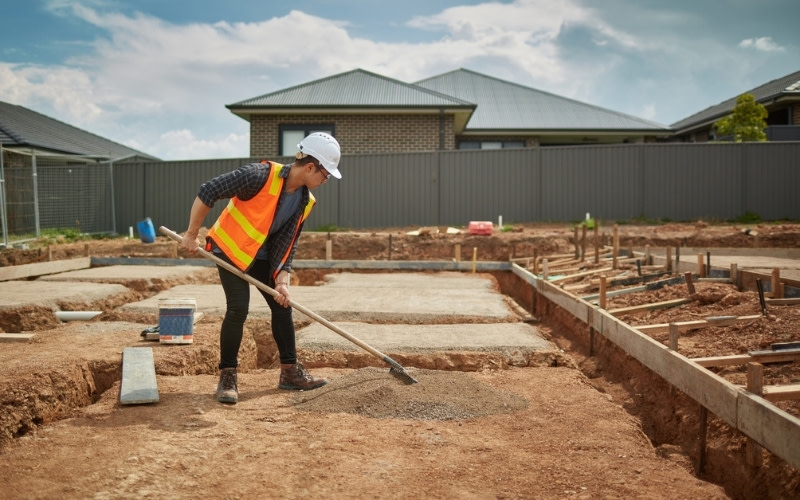
HIA assessment of ABS data released in January showed that construction starts increased by 11.2 per cent in the 12 months to September 2025. However, the 184,460 homes started were still below the rate of 240,000 needed annually to meet the government’s 1.2-million home target.
In Victoria, commencements grew by just 2.8 per cent to 55,227. Meanwhile, in WA, new housing starts grew by 30.2 per cent to 22,608.
Martin argued to the committee that increasing land supply could also generate more homes, and therefore more public revenue.
“If you want more revenue from housing, build more homes. More homes means more revenue. More homes means slower home price growth. More homes means fewer investors in the market as they leave in an orderly fashion for other investment opportunities,” Martin said.
“If the government were to build 1.2 million homes, they would raise an additional $50 billion in tax revenues, enabling them to invest in infrastructure to build even more homes, solving the affordability problem and investors would leave the housing market.”


Left for Dead, Office Sector Rises Again as Location Becomes King

Buying Capability, Not Scale: Colliers Doubles Down on Integrated Advice

Don’t Overreach Before Games, Veteran Warns Gold Coast Developers

No Change to Status Quo Ahead, Victorian Developers Warned


