

What You Need to Know About New Fall Protection Standards

In September 2025, Standards Australia released two updated fall protection standards with direct implications for developers, building owners, architects and contrators.
Together they set out new requirements across the full project lifecycle, from initial design through to construction and ongoing building management.
A transition period means most existing systems are still assessed under previous versions, but that window will close and decisions made now will determine whether future upgrades are required.
The updated standards are part of ongoing work by government, industry and other stakeholders to reduce the toll of serious and fatal falls from height in Australian workplaces.
The new standard
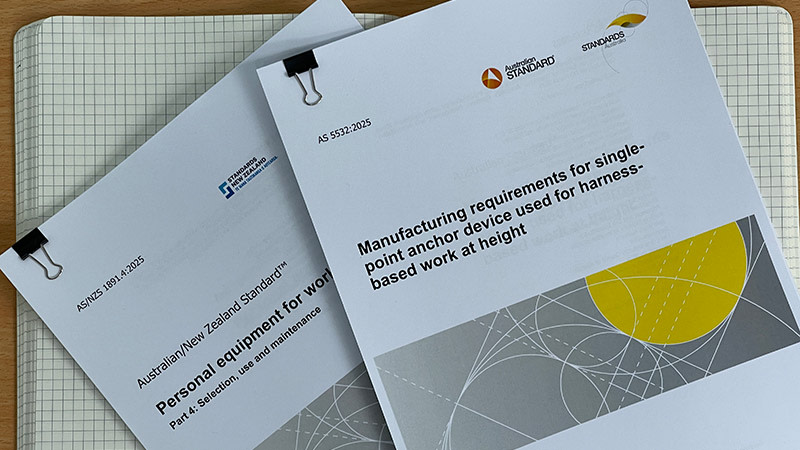
The two updated standards are AS/NZS 1891.4:2025 and AS 5532:2025. The first covers the selection, use and maintenance of industrial fall protection equipment. The second sets the standard for single-point anchor systems used in harness-based work at height.
The detail of AS 5532 is most relevant to those who design and manufacture anchor points. For the wider industry, the key requirement is to ensure that anchor points used on projects comply with this standard.
AS/NZS 1891.4:2025 applies more broadly to architects, project managers, contractors, sub-contractors and individual workers.
Architects, designers and specifiers
The standard includes an important update for those who design fall protection and height safety systems. It clarifies the order in which different system types must be assessed when choosing the most practical solution.
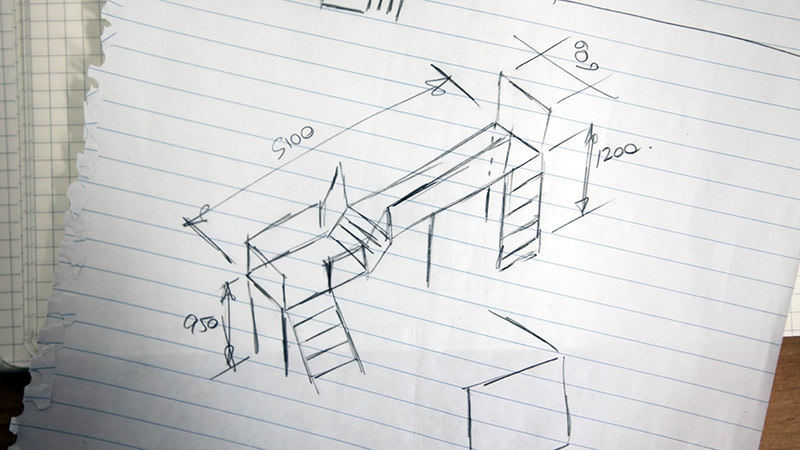
When assessing options, passive systems, where the user is fully restrained without any action on their part, must be considered before active systems that require the worker to apply a restraint technique themselves.
Developers and project managers
For developers, the impact of the updated standards begins at the design stage and runs through to handover.
Systems that fall short of AS/NZS 1891.4:2025 are unlikely to cause problems at practical completion as the installing contractor will certify the system under whichever standard it was designed to, covering it for 12 months.
The risk arrives later. When that system undergoes its first or second compliance inspection, it may be failed if it was originally designed and signed off under the 2009 standard.
For a developer who has already handed over the building, that becomes the owner’s problem and potentially raises a question about what was delivered.
Building owners who inherit non-compliant systems face future upgrade costs that can affect asset value and create issues during buyer or tenant due diligence. Bringing in a height safety specialist at the design stage is the most effective step ahead of full industry transition.
Building managers, owners and employers
For those who direct workers to use fall protection systems, the updated standards raise several matters to address.
Most relate to formal compliance inspections carried out on systems. The new standard removes previous confusion around timing: permanently installed systems must be checked every 12 months and removable items like PPE, ropes and connectors need to be checked every six months.
Most existing systems are currently assessed under the previous version but will eventually be evaluated against the new standard. A transition period is normal following the release of updated requirements. Full adoption by industry will come in time.
Building owners and facility managers should plan for the possibility that their current systems may need upgrading to remain compliant under the new standard.
Employees and workers
Workers depend on compliant, well-maintained fall protection systems to do their jobs safely.
The updated AS/NZS 1891.4 standard changes how workers should access and use those systems, with a focus on pitched and steep roofs.
A second back connection point is now required where a fall protection system is what keeps a worker safely positioned in the work area. This reduces the risk of a fall should the primary system fail and mirrors the approach used in rope access and abseil work.
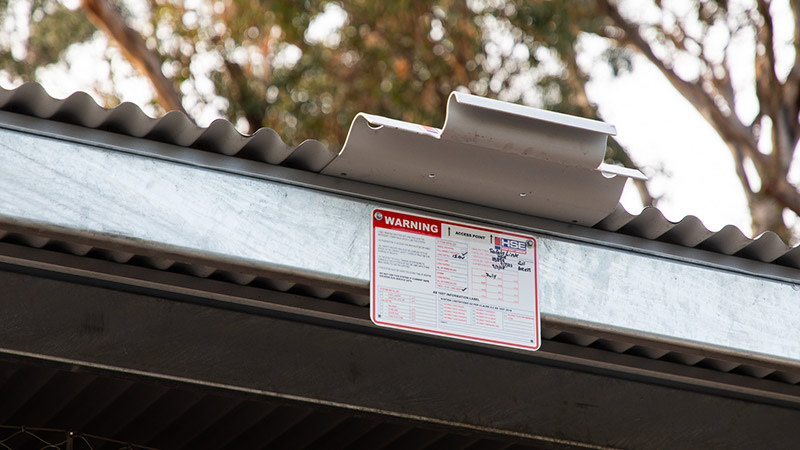
The other key change for workers involves roof anchors. Anchors must never be loaded beyond their design capacity during a fall. A rope line must be re-anchored whenever it diverts more than 60 degrees.
Standards operate alongside rather than within the laws that govern workplace safety, but they play a central part in how those laws are applied.
Where a fall from height results in injury, whether systems met the relevant standard will be a key factor in any review.
The updated standards set a clear new benchmark for everyone who specifies, approves or maintains fall protection systems.
Fall protection matters
Falls from height are among the most common causes of serious injury and death in Australian workplaces.
The updated standards offer a real chance to close the gaps in how protection systems are designed, specified, maintained and used but only if the industry responds.
HSE works with developers, building owners, architects and contractors across Australia on height safety compliance, from early design through to routine inspections.
With the transition period now underway, this is the right time to review whether your systems and specifications meet the new standard.
The Urban Developer is proud to partner with HSE to deliver this article to you. In doing so, we can continue to publish our daily news, information, insights and opinion to you, our valued readers.

Local Agreement Trumps State Approval in Adelaide Tower Height Fight

Frustrated Industry Cautiously Lends Support to National Construction Code Fixes

Beyond the Grid: Australia’s Self-Sufficient City Revolution Gathers Pace

‘Faster than HDA’: Newcastle Slashes DA Approval Times in Half


